
 Joe Differentiators

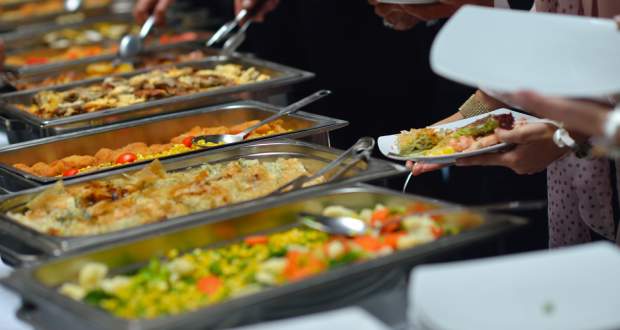
Here's something that happened last month: A client called asking if we could recreate their grandmother's mutton curry recipe for their corporate Diwali celebration. "It serves 6 people perfectly," they said. "We need it for 400."
Sounds simple, right? Just multiply everything by 67 and call it a day.
Wrong.
After six years of running Captain Joe, I've learned that scaling recipes is part science, part art, and part pure kitchen magic. And honestly, it's one of the most fascinating challenges we face when you order food for birthday party celebrations or corporate events.
The Math Behind the Magic (It's Not Just Multiplying by 50)
When small party caterers near me tell you they can just "make more," they're missing a crucial point. Recipe scaling isn't linear math—it's exponential complexity.
Take salt, for instance. If your home recipe calls for 2 teaspoons of salt for 6 servings, you don't need 134 teaspoons for 400 people. You'd create an inedible salt bomb. The actual amount? Usually around 80-90 teaspoons.
Here's why: as volumes increase, the surface area to volume ratio changes. Spices penetrate differently. Cooking vessels behave differently. Even the way ingredients mix changes when you're stirring 50 kilos instead of 2.
We call this the "scaling curve," and it's different for every single ingredient.
Small Party Caterers Near Me vs. Large Event Specialists
This is where experience matters. A caterer who typically handles 20-30 person gatherings faces a completely different challenge when scaling to corporate levels.
At Captain Joe, we've handled everything from intimate 20-person birthday dinners to 1,000+ guest corporate galas. That range teaches you things you simply can't learn from textbooks.
The Science of Scaling: What Changes When We Go Big
Cooking Times: The Biggest Surprise
Your home oven cooks 2 kg of chicken in 45 minutes. Our commercial oven doesn't cook 40 kg in 22.5 minutes (45 × 0.5). It might take 2.5 hours because:
- Heat distribution patterns change
- Moisture behaves differently in large quantities
- Dense ingredient layers create insulation effects
Seasoning: The Make-or-Break Factor
This is where most scaling attempts fail catastrophically. Spices don't scale proportionally because:
- Volatile compounds evaporate differently in large batches
- Fat absorption changes with quantity ratios
- Cooking time affects spice intensity differently at scale
We maintain detailed scaling charts for every spice combination. Turmeric scales at about 0.7x the proportional amount. Garam masala? Nearly 0.6x. Red chili powder? Depends on the brand and the base dish.
Real Kitchen Challenges: Turning Grandma's Biryani into 500 Portions
Let me tell you about that mutton curry challenge. The original recipe was gorgeous—tender meat, rich gravy, perfect balance. Scaling it taught us three critical lessons:
Lesson 1: Browning Changes Everything
At home, you brown 500g of mutton in a single layer. We need to brown 30kg. But if you overcrowd the pan (which you must at this scale), you're steaming, not browning. The flavor profile completely changes.
Lesson 2: Reduction Time Isn't Linear
Their grandmother's recipe called for reducing the gravy for 20 minutes. At our scale, with 15 liters of liquid, reduction took nearly 90 minutes to achieve the same consistency.
Lesson 3: Tasting Becomes Scientific
When you're cooking for 6, you taste and adjust. When we're cooking for 400, one "taste and adjust" moment can affect 50 portions. We developed a systematic sampling method—testing from different parts of the cooking vessel at specific time intervals.
Corporate Catering Services in Gurgaon: Lessons Learned
Working with Gurgaon's corporate clients taught us about consistency under pressure. When a tech company orders lunch for 300 employees, every portion needs to taste identical.
We once had a situation where the first 100 portions were perfectly spiced, but the last 100 were bland. The issue? Our stirring technique wasn't distributing spices evenly in large batches. Now we have specific protocols for mixing at different volume levels.
The Captain Joe Method: Our 4-Step Recipe Adaptation Process
After years of trial and error (and some spectacular failures), we developed our systematic approach:
Step 1: Test Batches
We never scale directly from 6 to 400 servings. Instead:
- 6 servings → 25 servings → 100 servings → 400 servings
- Each step teaches us something new about that specific recipe
Step 2: Adjustment Calculations
We maintain scaling factors for different ingredient categories:
- Proteins: Usually 0.9-1.0x scaling
- Base spices: 0.6-0.8x scaling
- Aromatics (ginger, garlic): 0.7-0.9x scaling
- Liquids: Varies dramatically by cooking method
Step 3: Quality Checkpoints
Every 30 minutes during cooking, we sample from three different spots in each cooking vessel. Consistency is everything.
Step 4: Final Execution Documentation
We document every successful scaling for our recipe database. Next time someone wants that same dish, we're ready.
When You Order Food for Birthday Party: What Happens Behind the Scenes
Ever wondered why we ask so many questions when you order food for birthday party celebrations? Here's the behind-the-scenes reality:
"How many adults vs. children?" - Children eat different portion sizes, and their preferences affect our spice scaling decisions.
"Any dietary restrictions?" - One person's dietary need can affect how we approach the entire batch scaling.
"Indoor or outdoor venue?" - Believe it or not, this affects food temperature retention and influences our cooking timeline.
"What time is the meal being served?" - Different times of day affect appetite levels, which influences portion calculations.
When you place an order, you're not just buying food—you're buying our years of scaling expertise.
Pro Tips: What Home Cooks Can Learn from Commercial Scaling
Want to scale your own recipes for larger family gatherings? Here's what we've learned:
The 4x Rule
Most home recipes can safely scale up to 4x the original size using proportional math. Beyond that, you need to start adjusting.
Season in Stages
Don't add all your spices at once when scaling. Add 60% at the beginning, taste at 75% completion, then adjust.
Temperature Mapping
Large batches create hot and cool spots. Stir from the bottom and check temperatures in multiple locations.
The 24-Hour Test
When scaling significantly, make the dish a day ahead if possible. Flavors develop differently in large quantities, and overnight rest often improves the final result.
Ready to Skip the Scaling Stress?
Scaling recipes is fascinating, but it's also incredibly complex. When you order food for birthday party celebrations or corporate events from Captain Joe, you're getting six years of scaling expertise and countless hours of testing.
Whether you need corporate catering services in Gurgaon for your next office celebration or you're searching for small party caterers near me for an intimate gathering, we handle the science so you can focus on enjoying your event.
Ready to experience perfectly scaled, restaurant-quality food for your next celebration? Contact Captain Joe at +91 989-998-8185 or hello@captainjoe.in. Let's turn your favorite recipes into unforgettable experiences for any size gathering.
Because good food shouldn't break the bank—or break your stress levels trying to make it for 500 people.